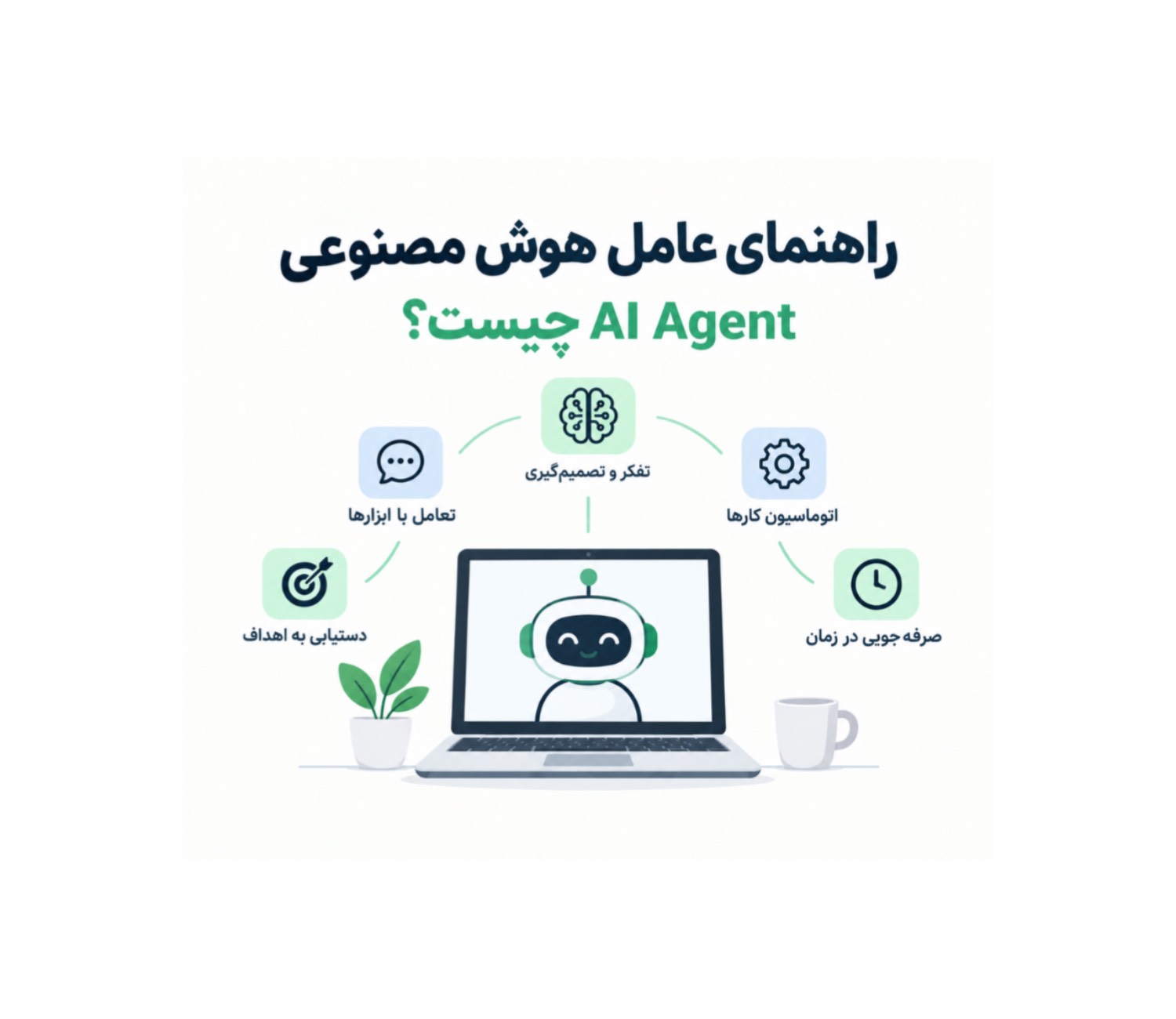
AI Agents and Their Role in Business Intelligence
Artificial intelligence is changing the way many digital activities are performed. One of the technologies driving this transformation further is theAI Agent, also known as an artificial intelligence agent.
Unlike tools that simply respond to a single request, an AI Agent can analyze information, plan a sequence of actions to achieve a specific goal, and use different tools to perform the required tasks.
What Is an AI Agent?
An AI Agent is an intelligent software system that uses AI models, data, and connected tools to work toward a specific objective.
In a custom AI system, an Agent can be connected to databases, APIs, websites, or other software applications, allowing it to perform parts of real-world business processes.
For this reason, AI Agent development is not simply about building a chatbot. It involves defining the objective, required tools, available information, access permissions, and the way tasks should be executed.
The Difference Between an AI Agent and a Chatbot
A chatbot is generally designed for conversation and answering questions. An AI Agent however, can go beyond responding by breaking a task into multiple steps and using different tools to complete it.
This capability has made AI Automation and Agentic AI important components of modern automation solutions.
For example, a chatbot might explain the details of a service to a user. An AI Agent for business, on the other hand, can receive a customer request, collect the required information, and route it to the appropriate business process.
AI Agent Applications in Business
Today, AI Agents can be used across different areas of an organization. For example:
Sales AI Agent: Managing and categorizing customer inquiries
Customer Support AI Agent:Responding to and managing customer requests
SEO Agent: Supporting content analysis and SEO processes
Content Creation AI Agent: Generating ideas and preparing digital content
Data Management AI Agent: Analyzing and extracting information
Website AI Agent: Enabling more intelligent interactions with website users
These systems can work together to create an intelligent workflow. In multi-agent architectures, multiple specialized Agents can also collaborate to achieve a shared objective.
AI Agents and Intelligent Automation
One of the most important applications of AI Agents is automating processes that previously required manual work.
In traditional automation, the workflow is usually predefined. However, in anAgentic Workflow, the system can determine appropriate steps based on the objective and available information and adjust its path throughout the process.
For businesses, this capability can help reduce repetitive tasks and create faster and more organized workflows.
Custom AI Agent Development
Every business has different needs. Therefore, building acustom AI Agentshould be based on the project's actual objectives.
When designing an AI Agent, factors such as the AI model, required data, memory, tools, APIs, access permissions, and methods for monitoring and controlling the Agent's performance are typically defined.
For this reason, before developing an AI system for a business, it is important to determine exactly what problem the Agent is expected to solve and which systems it needs to interact with.
The Future of Agentic AI
The transition from simple chatbots toward Agentic AI and AI Automation shows that the role of artificial intelligence in business will not be limited to content generation.
Agents can connect to different tools and systems and participate in executing complex, multi-step processes.
Conclusion
AI Agents, Artificial Intelligence Agents, and Agentic AI provide a way to transform artificial intelligence from a system that primarily responds to requests into a system capable of performing tasks.
Through custom AI Agent development, businesses can create solutions for automation, SEO, sales, customer support, data management, and many other digital processes.
The primary goal of this technology is not to completely replace humans. Instead, it is to make business processes smarter and reduce repetitive work.